Arabic dialects in AI video: speaking each market's Arabic
An Arabic ad that sounds like the wrong country loses the viewer in the first line. This is how U3 matches voice, lip-sync and on-screen text to each market it works in.
By Mohamed Yousry, founder · Published · 5 min read
Arabic dialects in AI video: which one to use
Use the Arabic your audience speaks. U3 produces in Gulf Arabic for Saudi Arabia, the UAE, Kuwait and Qatar; in Egyptian Arabic for Egypt; and in Modern Standard Arabic for formal and pan-Arab versions, plus English and German. In every version the voice-over, the lip-sync and the on-screen text match the market, and each version is checked for its market before it is delivered.
AI makes this practical because a language version is not a new shoot. One master film is conformed into each language, so a campaign can speak Gulf Arabic in Saudi Arabia and Egyptian Arabic in Egypt with no crew to fly, no equipment to ship and no location to rent.
One master, a version for each market
At U3, AI dubbing and localization are done as production, not as an overlay. One master edit is conformed into each language: the voice-over is recorded or generated per language and lip-synced to the picture, on-screen text is set in each script, and captions and cutdowns ship with every version. The result is a film in each language, not subtitles over someone else's mouth.
The clearest published example is episode one of thyssenkrupp Uhde's THINK • ASSESS • ACT safety series: a 3:47 PPE film produced entirely with AI and delivered in Arabic, English and German, each version lip-synced, so a team in Cairo, Jeddah or Duisburg watches the same film in its own language. The case study shows what shipped, and AI dubbing for companies covers the service in detail.
Gulf, Egyptian or Modern Standard Arabic?
The choice follows the audience and the purpose of the film. One campaign can carry more than one version: say in the brief where the film will run, and the versions are scoped with it, together with any market-specific requirements such as disclosure wording, content rules and subtitle standards.
- Gulf Arabic: for audiences in Saudi Arabia, the UAE, Kuwait and Qatar.
- Egyptian Arabic: for audiences in Egypt.
- Modern Standard Arabic: for formal versions, and for pan-Arab audiences across markets.
- English and German: for international teams and audiences, alongside the Arabic versions.
When pictures and on-screen text carry the message
Not every film needs a voice. When First Step, an autism care centre in Kuwait, opened a branch in Qatar, U3 made two vertical films with no dialogue and Arabic on-screen text. The 15-second opening film is one image: a child turning wooden number blocks from 965, Kuwait's dialling code, to 974, Qatar's.
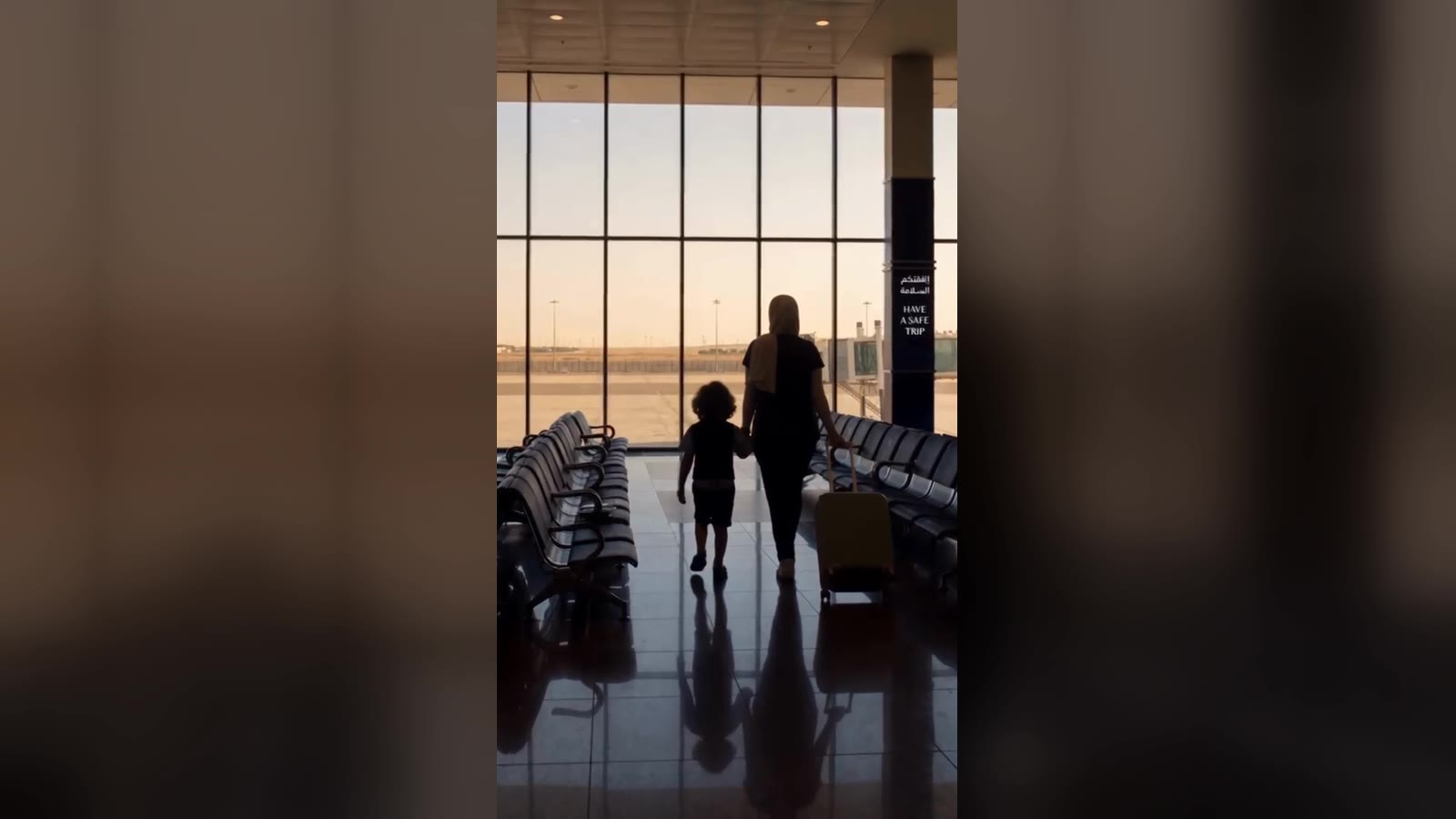
The second film follows a child with a suitcase through Kuwait International Airport to his First Step therapist at the gate. No child was filmed and nothing was shot in either country: the locations were generated, and the same character carried from the first film into the second.
For First Step's recurring awareness films in Kuwait, the work is Arabic-first storytelling for Kuwaiti families, built from one controlled production world so each new film is a script decision rather than a new production.
Cultural fit, market by market
Language is only part of it. The work U3 has published for each market shows the other part: the details a local viewer expects to see. Each Gulf production is linked from the Gulf page, market by market.
- Saudi Arabia: a Saudi National Day film for Ninth Bar Café, walked through the café by its host, with an ardah at the door and the flag out front; promo films for Marriott Jeddah Madinah Road; and a promo film for the Ministry of Hajj and Umrah, produced for the ministry's contracted agency.
- United Arab Emirates: the official 2026/27 season film for Al Ahly Academy's UAE branch in Dubai, Sharjah and Ajman, in Arabic, art-directed to the club's crest, red and kits, cutting real 4K academy footage with AI-built worlds.
- Kuwait and Qatar: First Step's awareness films in Kuwait and its opening films in Qatar; and in Qatar, Fine Mattress's Cool Touch ad.
- Egypt: U3 is based in Alexandria and produces in Egyptian Arabic; its work in Egypt includes Egypt's World Cup squad film, a U3 original idea made with Egypt AI Studio and broadcast on Egyptian national television.
How to brief a multilingual AI film
Tell U3 three things: where the film will run, which languages and dialects each market needs, and who appears on screen. The dubbing brief asks for the market and the languages; footage you already shot is dubbed on request, with the consent of the people in it.
Production for the Gulf is delivered remotely from Alexandria. Briefs arrive by WhatsApp or email, stages are approved online in your time zone, and masters, language versions and cutdowns are delivered to your drive; international clients are invoiced in USD. Productions are paid 50% to start and 50% on delivery.
Questions buyers ask
Which Arabic dialects does U3 produce AI videos in?
Gulf, Egyptian and Modern Standard Arabic, plus English and German. Voice-over, lip-sync and on-screen text all match the market you are targeting.
Should a pan-Arab campaign use Gulf Arabic or Modern Standard Arabic?
Modern Standard Arabic is used for formal and pan-Arab versions, and Gulf Arabic for audiences in Saudi Arabia, the UAE, Kuwait and Qatar. One master film can be delivered in both, each version lip-synced and checked for its market.
Is AI dubbing the same as subtitles?
No. Each language version has its own lip-synced voice-over and on-screen text set in its own script, and captions and cutdowns ship with every version.
Can you dub footage we already shot into Gulf Arabic?
Yes, on request. The voice-over is produced in each language and lip-synced to the people on screen, with their consent, and each project is scoped and quoted at the brief.
Do you produce for Saudi Arabia, the UAE, Kuwait and Qatar remotely?
Yes. U3 is based in Alexandria, Egypt; briefs arrive by WhatsApp or email, stages are approved online in your time zone, and international clients are invoiced in USD.
Related work
- thyssenkrupp Uhde AI Safety Film in 3 Languages — Case study
- First Step Qatar Opening Films — Case study
- First Step Kuwait: Pediatric Health Content, No Kids Filmed — Case study
- Al Ahly Academy UAE Season Film — Case study
- Ninth Bar Café — Saudi National Day — Film
- Egypt’s World Cup squad — an AI celebration film — Film
Services
More insights
- AI dubbing for companies: one film in every language your teams work in — AI dubbing lets a company produce one film and deliver it in each language its people work in, every version lip-synced. Here is how U3 does it, with a published safety film as the example.
- AI product ads that sell: the real product, in four formats — An AI product ad works when the product on screen is the one that arrives in the box. Here is how U3 builds them, the four formats it uses, and what the published work in Qatar, Iraq, Saudi Arabia and Egypt shows.
- AI training and safety films for companies: multilingual, with no crew on site — Safety, training and internal-communications films can be produced with AI without sending a crew on site, and delivered in every language a company's teams work in. Here is how U3 makes them, with thyssenkrupp Uhde's published safety film as the example.