AI dubbing for companies: one film in every language your teams work in
AI dubbing lets a company produce one film and deliver it in each language its people work in, every version lip-synced. Here is how U3 does it, with a published safety film as the example.
By Mohamed Yousry, founder · Published · 5 min read
What AI dubbing for companies is
AI dubbing for companies means producing one master film and delivering it in each language its audience works in, with a lip-synced voice-over in every version instead of subtitles over someone else's mouth. At U3 it is done as production, not as an overlay: one master edit is conformed into each language, the voice-over is recorded or generated per language and lip-synced to the picture, on-screen text is set in each script, and captions and cutdowns ship with every version.
The languages are Gulf Arabic for Saudi Arabia, the UAE, Kuwait and Qatar; Egyptian Arabic; Modern Standard Arabic for formal and pan-Arab versions; English; and German. Each version is checked for its market before it is delivered. The service itself is described on the AI dubbing and localization page.
A published example: thyssenkrupp Uhde's PPE safety film
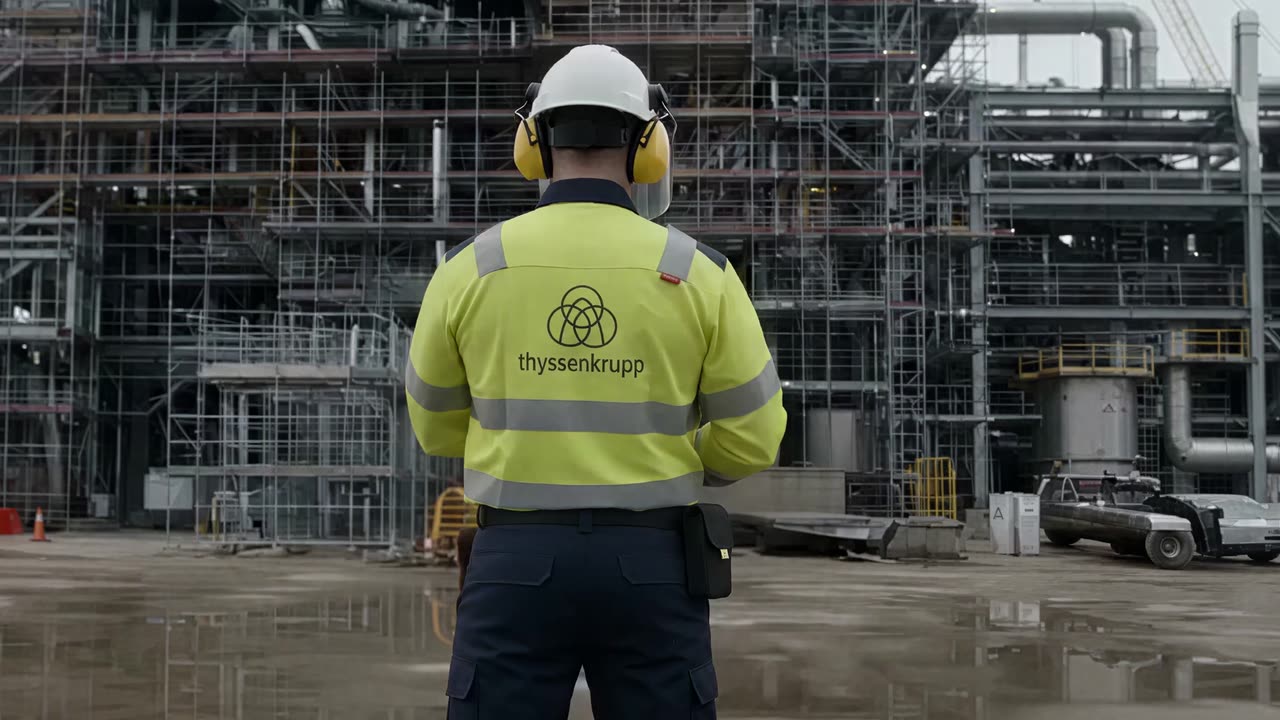
The clearest example on the site is episode one of THINK • ASSESS • ACT, the HSSE learning series of the German engineering group thyssenkrupp Uhde. It is a 3:47 film on personal protective equipment, produced entirely with AI without entering the plant, and delivered in Arabic, English and German, each version lip-synced, so a team in Cairo, Jeddah or Duisburg watches the same film in its own language.
Three production decisions made the dubbing work. Each scene was designed around a single line of voice-over, so the picture never competes with the message. Characters and their protective equipment were held consistent with locked references rather than re-generated shot by shot. And a single master edit was conformed across the three language versions, each with its own lip-synced voice-over. The character and reference system can be reused for the next episodes. The case study has the film and the full script.
Dubbing footage you already shot
Not every film has to start with U3. On request, U3 also dubs and localizes live-action footage a company already has, such as a commercial, a training film or an interview shot on camera. The voice-over is produced in each language and lip-synced to the people on screen, on-screen text is set again in each script, and captions ship with every version.
This is done only with the consent of the people whose faces and voices appear. In a film U3 makes for a client, a real person's likeness or voice is generated only with that person's, or their representative's, documented consent, and only for the uses that consent covers. Each project is scoped and quoted at the brief; the terms are in the rights and AI policy.
Where companies use AI dubbing
The pattern is any film that has to reach people in more than one language:
- HSE and safety awareness series for multinational workforces
- Onboarding and induction films
- Compliance and policy communication
- Technical and process explainers
- Executive and internal announcements
- Training series delivered episode by episode
- Campaigns and product films that run in more than one language
How the files are delivered
Everything ships as files: masters, language versions, captions and cutdowns, ready for your LMS, intranet, town halls, site screens or paid social. Usage rights are defined in the statement of work, and a film stays unpublished until you clear it. More on enterprise films.
Dubbing or subtitles?
Subtitles ask the viewer to read while someone on screen speaks another language. A lip-synced version lets each team hear the message in its own language from the people on screen, which is why U3 produces localization with its own voice-over per language rather than subtitles alone. Captions and subtitle files are still delivered with every version.
Market-specific requirements, such as disclosure wording, content rules and subtitle standards, are scoped with the brief. Where a market or a client requires an on-screen or in-description AI disclosure, U3 prepares it with you, and on request it provides a disclosure note describing what was generated, what was recorded and what was edited.
What to send, and how it is priced
Brief a dubbing project on the project form with three answers: which film or footage, which languages, and who appears on screen. An NDA is standard for enterprise work. On request, typically from procurement, U3 lists the models, platforms and tools used on a production, with their vendors and the licence terms that apply to the output.
Assets you share, such as logos, footage, voices and documents, are used only to produce your project: they are not used to train models, are not shared with other clients and are deleted on request after delivery. Production is paid 50% to start and 50% on delivery. How a budget is built is explained in what an AI video ad costs.
Questions buyers ask
Which languages can U3 dub a company film into?
Gulf, Egyptian and Modern Standard Arabic, English and German. The voice-over, lip-sync and on-screen text are matched to the market each version is for.
Can you dub a video we filmed ourselves?
Yes, on request: commercials, training films or interviews shot on camera are dubbed and lip-synced to the people on screen, with the consent of everyone whose face and voice appear.
Is AI dubbing just subtitles with a voice?
No. Each version has its own lip-synced voice-over and on-screen text in its language, conformed from one master edit, and captions are delivered as well.
Will our footage be used to train AI models?
No. Material you share is used only to produce your project, is not shared with other clients and is deleted on request after delivery.
Which company film shows this work?
Episode one of thyssenkrupp Uhde's THINK • ASSESS • ACT HSSE series: a 3:47 film on personal protective equipment, delivered in Arabic, English and German with lip-synced voice-over.
Related work
- thyssenkrupp Uhde AI Safety Film in 3 Languages — Case study
Services
More insights
- AI training and safety films for companies: multilingual, with no crew on site — Safety, training and internal-communications films can be produced with AI without sending a crew on site, and delivered in every language a company's teams work in. Here is how U3 makes them, with thyssenkrupp Uhde's published safety film as the example.
- Rights, consent and AI video: what brands should know — An AI film raises questions a camera shoot rarely does: whose face is this, whose voice, and who owns the result? These are the answers U3 writes into its policy and its contracts.
- AI video production vs a traditional shoot: when each one makes sense — AI video production is not a cheaper version of a traditional shoot: it removes the shoot. Here is when that is the right call, when a camera still is, and what two published projects, for thyssenkrupp Uhde and Al Ahly Academy UAE, show.