AI feature films: what is possible today, and how one is made
A feature film can now be built entirely with AI, as long as the faces, the worlds and the grade hold for ninety minutes. This is what the work involves, how U3 runs it stage by stage, and the shorter films it has already made.
By Mohamed Yousry, founder · Published · 6 min read
AI feature films today: the short answer
A feature-length film can now be made entirely with AI. U3 can build feature films of 90 minutes and beyond, from the screenplay and a visual bible to locked characters, cinematic shot production, voice, music, editing, colour and a final 4K master, with language versions for the release plan. The service is described on the feature-length AI film production page.
What makes it possible is not that a tool can generate a beautiful shot; any tool can. The hard part of AI filmmaking is keeping a face, a wardrobe, a car and a room identical across ninety shots, and then across ninety minutes. That consistency is the craft, and it is what separates a feature from a short stretched to length.
Consistency: characters, worlds and one grade
Every principal and recurring character is built and frozen before production: face, body, wardrobe, ageing and expressions, so the person in scene one is the person in scene ninety. The same locked identity can carry across scenes, films and whole campaigns.
The worlds are designed the same way. Every location, interior and exterior, is built at every time of day the script calls for, from references rather than from chance. Shots are then produced to the storyboard with coverage for the edit, not one clip per scene, and the grade is applied across the whole picture so the film reads as one world.
The look itself is decided once, in a visual bible: palette, lensing, light, era, texture and references. It is the document every shot is checked against.
Eight stages, from script to 4K master
A feature moves through eight stages, and each one is approved before the next begins, so the film is never a surprise at the end:
- Script: structure, scenes, dialogue and runtime; the script lock starts the production clock.
- Visual bible: the look of the film, decided once.
- Character lock: every principal and recurring character, built and frozen.
- Worlds: environment design for every location the script needs.
- Shot production: the film shot by shot, to the storyboard.
- Performance: dialogue recorded or generated per character, lip-synced and directed line by line.
- Sound: original score, sound design, foley and mix.
- Master: editing, colour grade, titles and a final 4K master with language versions.
How long a feature takes
A feature-length project can be planned around an 8–12 week production window after script lock, depending on scope: cast size, the number of worlds, action density, languages and the release plan. The window is set in the proposal, stage by stage, with approvals in between, and only after the script has been read.
That is a plan built with the client, not a promise made before reading the script: U3 comes back with a scoped proposal, with stages, approvals and a production window, within a week of reading. For anything shorter, it can say within a day whether a script is producible, what the production would involve and how long it would take.
Productions are paid 50% to start and 50% on delivery, and usage and ownership terms are written into the statement of work. Language versions are covered in Arabic dialects in AI video.
The Friends of Khufu, U3's original AI film
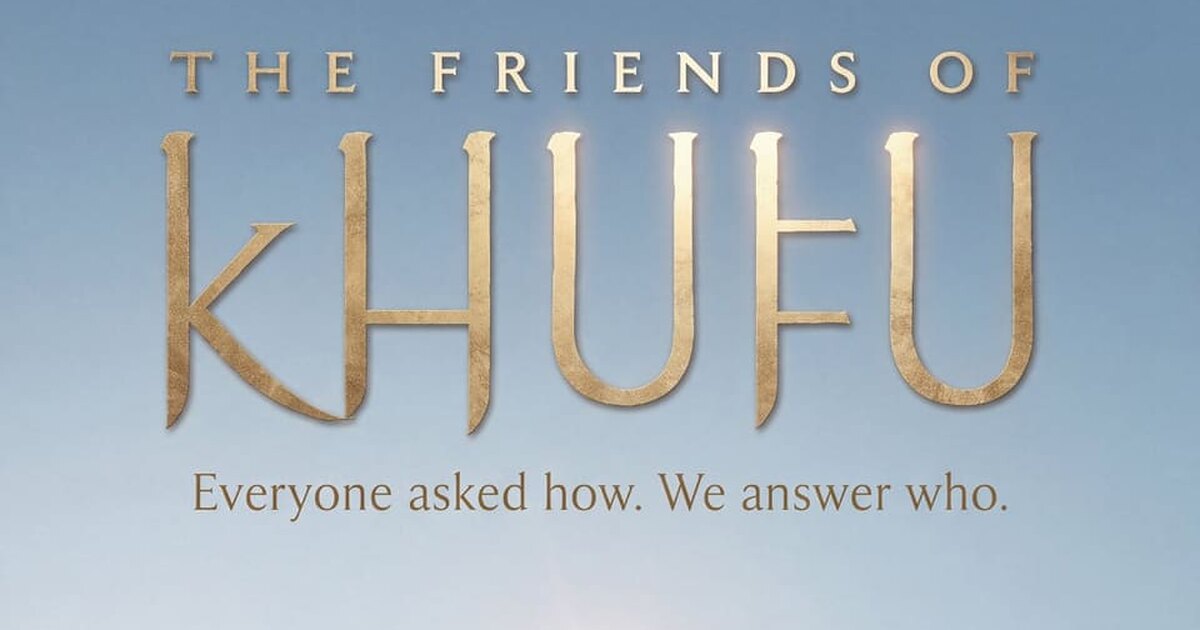
The Friends of Khufu is U3's own AI-generated cinematic short, written and directed by Mohamed Yousry and produced by U3 AI Agency in Alexandria as a non-commercial tribute to Egypt. Everyone asked how the pyramids were built; the film asks who built them, and answers with the name of a real man: Merer, an inspector of the boats that carried the white casing stone, whose logbook was found at Wadi al-Jarf in 2013.
It tests everything above. The world on screen is drawn from the published archaeological record: the workers' town and its bakeries at Giza, the builders' tombs, Tura stone carried by boat. The people are a dramatic reconstruction, with faces modelled on the statues of Rahotep and Nofret and every line of dialogue written for the film. It was made in 21:9 with Seedance 2.5 and Nano Banana 2 on Higgsfield.
The film is an Official Selection — Top 10 at Egypt Eternal Voices 2026, an AI filmmaking program about Egyptian history run by People of Data / People of AI. It is one of 10 films, from a field of 120 finalist films, selected for the Grand Finale at the Grand Egyptian Museum, and the published Top 10 is listed in no particular order. The full film is now public.
Narrative work made for clients
The same pipeline runs on client work. For Mr. Mohamed El-Sayed, U3 made three widescreen historical AI films: The Tomb, Nefertiti and a film set at the Grand Egyptian Museum, each a few minutes long.
U3's own films include Egypt's World Cup squad film, a U3 original idea made with Egypt AI Studio, which was broadcast on Egyptian national television on ON Sport, ON E and United Media Services channels and screened at the Fan Zone in the New Administrative Capital. Full music videos run on the same discipline: Baddak Ya Habibi is a 3:04 duet for Mahmoud Kayal and Maya Estephan with both likenesses locked from the first shot to the last.
A feature is the same discipline held for ninety minutes instead of three: locked faces, consistent worlds and one grade across the whole picture.
How to start an AI feature film
To scope a feature, U3 reads first. Send what you have through the feature film brief:
- A screenplay, a treatment or a detailed synopsis
- Visual references: films, photographs, artwork and the tone you are after
- The principal characters, and any real-person likeness rights already secured
- Target runtime, languages and the release plan: festival, platform, broadcast or private
- The deadline that matters, and the budget range if there is one
Questions buyers ask
How long can an AI film be?
U3 can build feature-length films of 90 minutes and beyond, delivered as a 4K master with language versions. Shorter narrative work, from short films to music videos, runs through the same pipeline.
How long does an AI feature film take to produce?
A feature-length project can be planned around an 8–12 week production window after script lock, depending on cast size, the number of worlds, action density, languages and the release plan. The window is set in the proposal, stage by stage.
Can the characters stay consistent for a whole film?
Yes. Every principal and recurring character is locked before production, including face, body, wardrobe, ageing and expressions, so they look the same in scene one and scene ninety.
What is The Friends of Khufu's festival status?
It is an Official Selection — Top 10 at Egypt Eternal Voices 2026: one of 10 films selected for the Grand Finale at the Grand Egyptian Museum. The published Top 10 is listed in no particular order.
Can an AI film use a real person's likeness?
In a film U3 makes for a client, only with that person's, or their representative's, documented consent, and only for the uses the consent covers. List any likeness rights already secured in the brief, and read rights, consent and AI video for the full policy.
Related work
- The Friends of Khufu — Film
- The Tomb — AI Cinematic — Film
- Nefertiti — Cinematic AI Ad — Film
- Mr. Mohamed El-Sayed — an AI film set at the Grand Egyptian Museum — Film
- Egypt’s World Cup squad — an AI celebration film — Film
- “Baddak Ya Habibi” AI Music Video, Full Length — Case study
Services
More insights
- How AI music videos are made: likeness, lip-sync and a world that holds together — An AI music video is directed as a music video first and an AI production second. This is how U3 holds an artist's likeness, voice and performance for the length of a song, and what it has released.
- Planning Ramadan 2027 with AI: series, channel content and ads — Ramadan 2027 is a fixed deadline, and everything made for it has to be ready before the month begins. U3 is now open for Ramadan 2027 collaborations with production companies, channels and brands; here is how to plan the work with AI.
- AI training and safety films for companies: multilingual, with no crew on site — Safety, training and internal-communications films can be produced with AI without sending a crew on site, and delivered in every language a company's teams work in. Here is how U3 makes them, with thyssenkrupp Uhde's published safety film as the example.